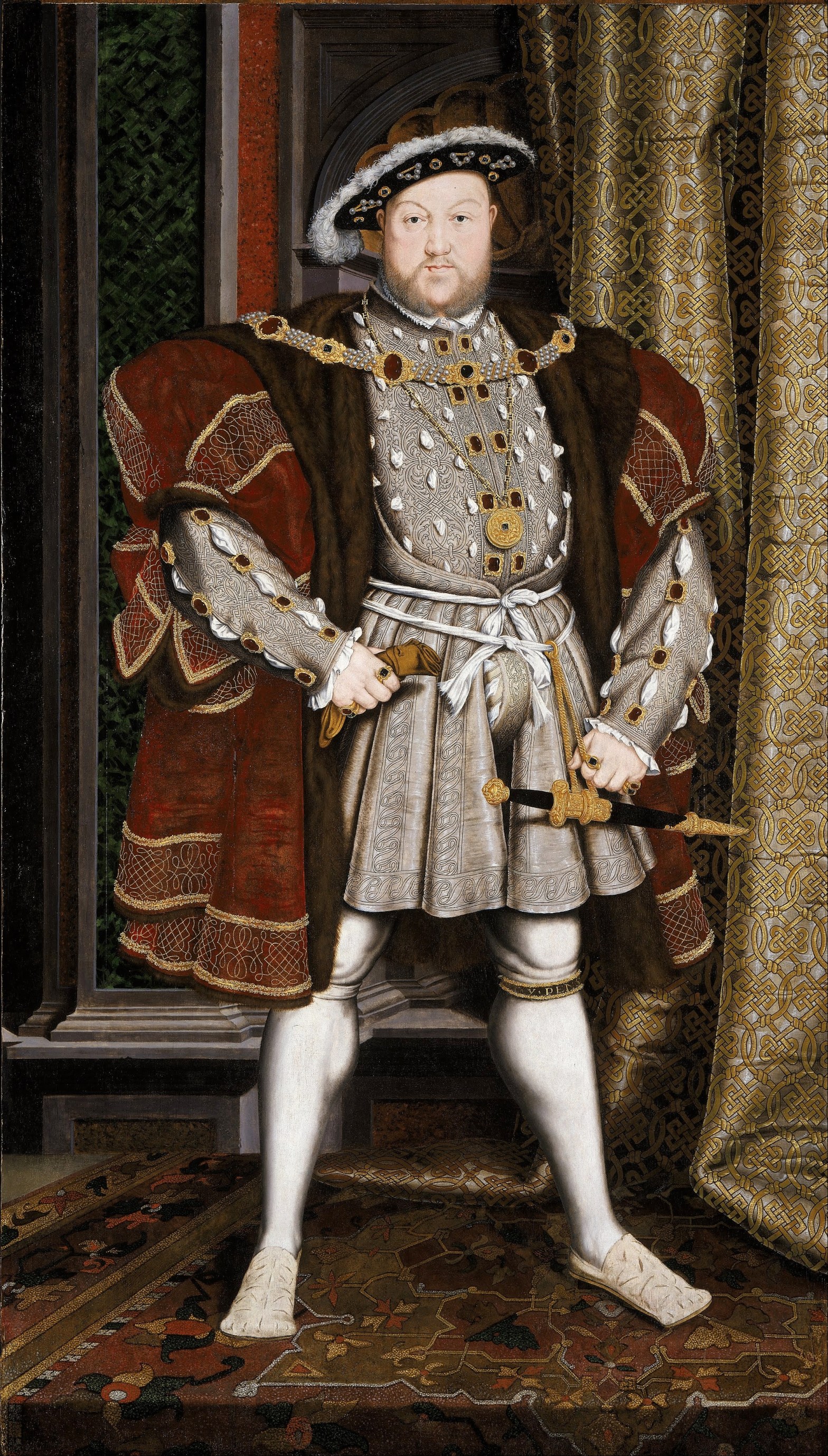
Henry VIII is one of those kings to most people. He is widely known as the fat old king who had a lot of wives. There are a lot of things out there about him: novels, movies, songs, magazine articles, tall tales, you name it—it’s out there. But very little truth is known about “Bluff King Hal.” In reality, Henry VIII started out as a wise and gentle young man but then slowly transformed into the cruel and murderous king we know.
When Henry became king in 1509, he was two weeks away from his eighteenth birthday. He was a dashing young man, “of visage lovely, of body mighty, strong, and clean made” (Plowden 17), fair in complexion, with auburn hair, and a round face. He mingled freely with common people and was irresistible when he chose to be. He was extremely athletic—“A first rate all-round sportsman” (Plowden 18). Henry had a good brain and spoke fluent French and Latin and a little Spanish and Italian. He loved music and knew how to play the lute, organ, virginal, and harpsichord and could sing and compose some. He loved luxury and dressing up; to celebrate May Day in 1515 Henry and his guard dressed up all in green as Robin Hood and his Merry Men (Lipscomb). He was loved by the people; Lord Mountjoy wrote,
When you know what a hero [the king] now shows himself, how wisely he behaves, what a lover he is of justice and goodness, what affection he bears to the learned, I will venture that you need no wings to make you fly to behold this new and auspicious star… The heavens laugh, the earth exalts, all things are full of milk, of honey, of nectar. (qtd. in Lipscomb)
Henry married Catharine of Aragon six weeks after coming to the throne. He loved Catharine in those early years, respecting her opinions in government matters and living out the part of a faithful husband (according to the royal standards of the day).
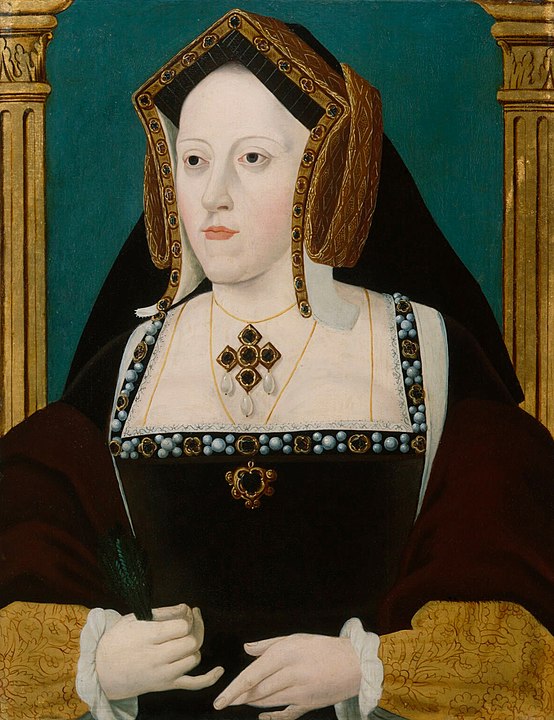
Then the horrible miscarriages started in 1510. There were miscarriages, babies born dead, and babies dying a few days (or weeks) after birth. In 1516 a baby girl was born and named Mary; she lived. But, alas for Catharine, no other baby did. Her miscarriages ended in 1518 with a baby born dead; after that she had no more pregnancies (Plowden 21). As a result, Henry began to lose interest in her. For Catharine this was depressing: she could not have children, and that fact not only strained her marriage but threatened her life. For Henry the situation was embarrassing: He, the king of England, could not produce a male heir, something that even peasant men could do.
It is not strange then, that in 1527 Henry suddenly read Leviticus 20:21—“If a man takes his brother’s wife it is an impurity. He has uncovered his brother’s nakedness; they shall be childless.”—and got it to work on his conscience. Catharine had been married to his brother Arthur in 1501, but Arthur died unexpectedly. Henry misinterpreted the verse and said you should not marry your brother’s widow (whereas the verse actually commanded you to not commit adultery with your brother’s wife), and since Catharine had been married to Arthur, God was punishing Henry by making Catharine unable to bear children (Plowden 20-22).
With supposed biblical support at his back, Henry began to make movements to divorce Catharine. In 1528 he wrote to Anne “assuring you that henceforth my heart will be dedicated to you alone, and wishing that my body was so too, for God can do it if he pleases” (Moynahan 127). This was heartbreaking for Catharine; her husband was now writing love letters to one of her maids. Henry no longer cared for the wife he had once loved dearly; and since he no longer cared for her, he had no intention of staying with her. This was much different from the young man who admired and valued everything about his wife.
Pope Clement VIII sent Cardinal Campeggio to England to hear the divorce case, which was now being called Henry’s “great matter.” On May 31st 1529 Campeggio opened the famous court at Blackfriars. Catharine defended herself, saying
Sir, I beseech thee… for all the loves that hath been between us, and for the love of God, let me have justice and right. Take of me some pity and compassion, for I am a poor woman and a stranger born of your domain… And when ye [Henry] had me at first… I take God to be my judge, I was a true maid, without touch of a man… (qtd. in Moynahan 181).
In essence, Catharine argued that Henry’s conclusions from Leviticus 20:21 didn’t apply to her because she was still a virgin when she married Henry (a fact that remains unproven), and beseeching him to have mercy on her and keep her as his wife (Moynahan 181).
After she left, Henry stood up and made excuses for her behavior and put his defense forward: “It was the scriptures alone that made him wish to cast off his wife of twenty years” (Moynahan 182) and he was in need of a male heir, which he would not obtain because he had married his brother’s widow. The truth was that “passion for Anne Boleyn led Henry by the nose, a fact almost universally recognized” (Moynahan 181).
On July 17th all of Henry’s hopes were crushed. The Pope wrote to Campeggio saying that he forbade Henry from divorcing Catharine and marrying Anne, and revoked Campeggio’s commission. On July 23rd Campeggio announced that he would be returning to Rome and that no hasty decisions would be made (Moynahan 183).
It was also in 1530 that Henry realized that he since would not be able to divorce Catharine with the Pope’s permission, he would just have to do it without. On February 7th, 1530 he commanded that Parliament recognize him as the “sole protector and supreme head of the English church and clergy” (Moynahan 235). The English Church immediately recognized him as its head.
Then came the blow for Catharine. Sometime in July 1531, Henry and Anne went on a hunting trip (which was not unusual). While they were gone, Henry sent a message to Catharine demanding that she be gone from court before his return. Catharine replied that “she would go wherever her husband commanded, to the stake if needs be” (Plowden 31). She had been anticipating this blow, yet can anticipation soften something like this? She was now officially rejected by her husband.
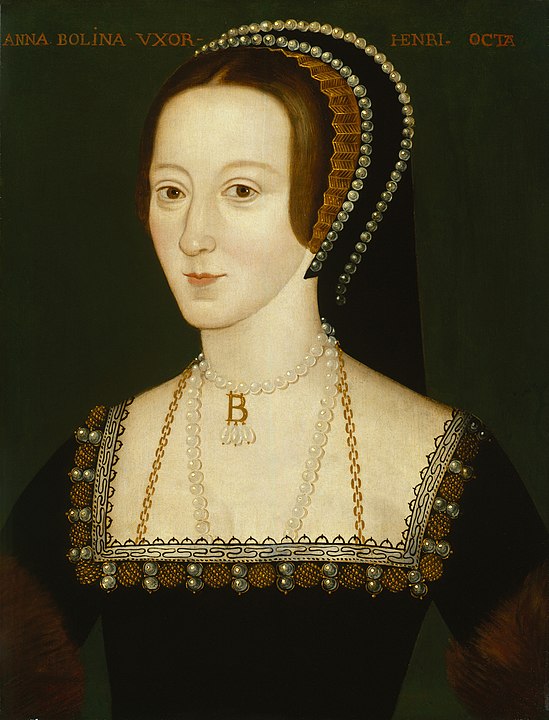
In January of 1533 Anne and Henry were married, unbeknownst to most of those at court. Even Thomas Cranmer didn’t know until two weeks afterwards (Plowden 33). At this point, Henry legally had two wives, and that is almost as far from acceptable as you can get. This shows how much Henry had changed form the “new and auspicious star” (Lipscomb) that he was when he first came to the throne.
A month later, Anne announced to her court that she was pregnant. Henry tried to move the divorce along fairly quickly after that; the child could be the heir that he had so long strived for, and it would ruin all his plans if the baby was born out of wedlock. He had already had that disappointment once (when Elizabeth Blount bore his illegitimate son Henry Fitzroy); he did not wish to have that happen again (Plowden 33-34).
Finally, things began to move in the direction Henry was shooting for. On March 30th (1533) Thomas Cranmer was made Archbishop by the Pope. He almost immediately broke away from the Roman Catholic church, and on April 11th he took over the case of the king’s “great matter.” On April 12th, Anne Boleyn was officially thought of as queen. On May 23rd Cranmer annulled Henry and Catharine’s marriage, and on May 28th he declared Henry and Anne’s marriage good and lawful. On May 31st Anne Boleyn was crowned queen. Henry had finally accomplished the thing he had been striving for for seven years—he and Anne were now married (Plowden 34-36). The people of England thought differently. Anne was talked of (behind her back) as “the king’s whore” (Moynahan 148). But Henry didn’t care at the time; he had gotten what he wanted. Now all that was left was to wait for the heir to be born, and everyone predicted that it would be a boy.
On September 11th 1533 a little girl was born to Henry and Anne and named Elizabeth. Henry must have been very disappointed—an “s” had to be added onto the word “Prince” on the document that was read at Elizabeth’s birth—but we can’t be absolutely sure (Moynahan 294).
In November 1534 Thomas Cromwell declared Henry to be the head of the English Church. Those who opposed this decision (including Fisher Bishop of Rochester and Sir Thomas More) were killed (Plowden 46). Now look at how much Henry had changed. He once was a gentle young man, who had been a “lover… of justice and goodness” (qtd. in Lipscomb) but now he was willing to kill people without a second thought if they got in his way.
By 1536 however, Anne Boleyn was starting to lose the king’s affections, and when on January 29th (which happened to be the day that Catharine of Aragon’s funeral was held) she miscarried a baby boy. Henry had gotten seriously injured (almost fatally) in a jousting accident, and Anne said that this news had startled her enough that she lost the baby. But this was a bad excuse; it was not true, and nobody believed it. Henry was hardly sympathetic; it was rumored that he hadn’t spoken to Anne more than twelve times in the past three months, and he was paying much more attention to Jane Seymour, one of Anne’s maids-of-honor (Plowden 49). Anne attempted to dismiss Jane, but Henry wouldn’t let her (Plowden 45). To Anne that must have been unsettlingly similar to what had happened to Catharine of Aragon some years before, a replaying of those past events—but now they were not in Anne’s favor.
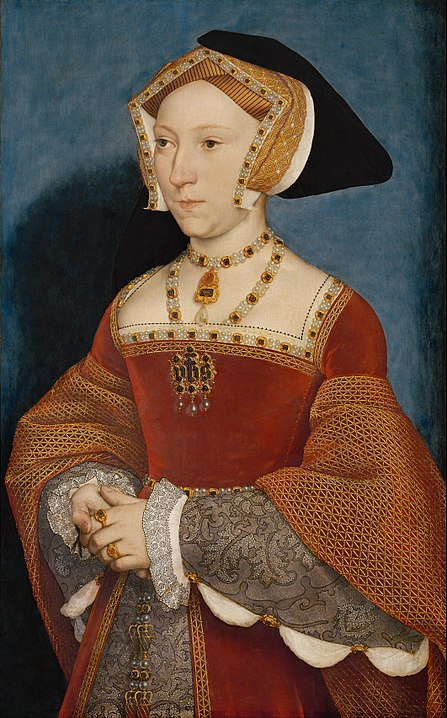
Henry would have his way, however, even if it meant killing his wife. On May 2nd, 1536 Anne Boleyn was taken to the Tower of London and accused of committing adultery (Plowden 51). Henry declared that he had been tricked into marrying Anne by witchcraft and he thought of his marriage as null and void (Plowden 49). This soon came lawfully to pass, for on May 17th Henry legally divorced Anne. Two days later, on May 19th 1536, Anne Boleyn was beheaded for committing adultery, “having never been a wife” (Plowden 55) because Henry divorced her. The following day Henry and Jane Seymour were betrothed, and they were then married on the 30th (Plowden 57).
On October 12th 1537 Henry’s greatest wish came to pass: Jane Seymour gave birth to a son, who was named Edward. The whole country was in a flurry of excitement, and Jane was neglected. Probably as a result of this, she died on October 24th of what historians think was puerperal sepsis. Jane Seymour was the only one of Henry’s wives who was buried as queen (Plowden 65-66).
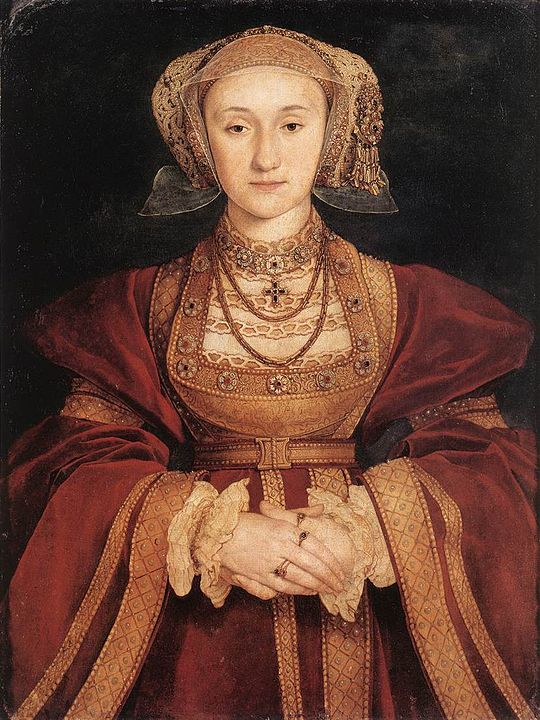
It was two years before Henry married again. He had kept Holbein busy painting portraits of no less than five princesses whom he was considering as potential brides, and finally decided on Anne of Cleves. She landed at Dover on December 27th, 1539. Henry soon found out that she was a “dull, shy, rather cow-like creature” (Plowden 71) and could not speak any language other than German. The marriage took place on January 6th 1540, and Henry was about as far from overjoyed as anyone could possibly be. His eye was soon caught by the “pretty, vivacious Katharine Howard” (Plowden 71), one of Anne’s ladies-in-waiting, and that made his marriage to Anne seem all the more begrudging to him. As a consequence, Henry’s conscience quickly go to work on the fact that Anne of Cleves had been tentatively betrothed to the Duke of Lorraine’s son, and by July 1540 enough legal confusion had been created to let Henry divorce Anne without much problem. On July 28th (about two weeks after Henry’s divorce of Anne of Cleves) Henry married Katharine
Howard (Plowden 70-72).
Thomas Cromwell soon met the end of his life; he was executed for high treason, though his encouraging Henry to marry Anne of Cleves might have had some part in it. You can see how much Henry had changed by now; a French ambassador described Henry as
Fearful, inconsistent, and ‘so covetous that all the riches of the world would not satisfy him’… Henry’s inability ‘to trust a single man’ meant that ‘he will not cease to dip his hands in blood’ and ‘every day edicts are published so sanguinary that with a thousand guards one would scarce be safe.’ (qtd. in Lipscomb)
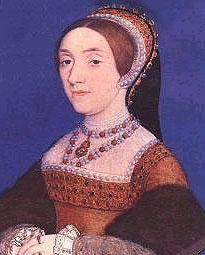
Surprisingly, Henry loved Katharine Howard, so much in fact that when he was first told that she was committing adultery, he refused to believe it. But it was true, no matter how crazy it seemed, and a terrified Katharine was beheaded on February 13th, 1542 (Plowden 72-73). She had made a wrong move—committing adultery when she fully well knew that it would probably cost her her life—and payed for it.
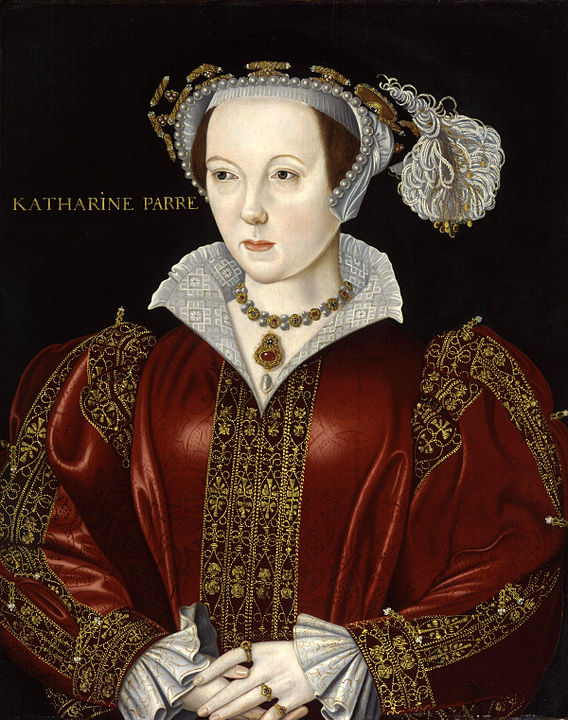
Henry remained single for a year, and then married thirty-one year old Katharine Parr, who was twice widowed and unhappy about the honor done to her (Plowden 74).
But she didn’t need to put up with Henry for long. He was aging and unhealthy. His jousting accident years before had injured him so that he could not be as athletic as before, and he had overexerted and strained himself (athletically) during his marriage to Katharine Howard. He was becoming grossly fat and had to be carried about on a chair when he was indoors. He had an ulcer on one of his legs, which “Brought him constant and debilitating pain, together with infections, fevers, and discharges that produced a putrid smell” (Lipscomb).
Henry had become a misanthropic, suspicious and cruel king, and his subjects began (discreetly, for such words were illegal) to call him a tyrant. In his early years, Henry’s charisma and egoism had been directed into a little showing-off while jousting (on one occasion he presented himself before the queen and the ladies with ‘a thousand jumps in the air’), but the ends to which these qualities were now deployed had changed. Now they fueled a vastly more repressive and harsh regime. (Lipscomb)
Henry was evidently a very sick man, and as a result he became cruel and suspicious with frequent bouts of anger. “Another, more recent, theory is that Henry was suffering from osteomyelitis, a chronic septic infection of the bone, following an injury received in one of his mishaps in the tiltyard” (Plowden 77). Henry also happened to be receiving no treatment whatsoever for his pain and sickness. Yet, it didn’t have to be this way; if he had made good decisions in his earlier years, he would have been fine later on in life. However, he made choices that he couldn’t undo and suffered the consequences later on.
On January 27th 1547 Henry lapsed into semiconscious. The next day early in the morning, Henry died. He had reigned for thirty-eight years,
He had done things which no English king before him had dared to do and had, incredibly, got away with them. Beneath his monstrous, sometimes preposterous, egoism, he had loved England and its people, and the people, though they had not always approved of him, had loved him in return. Indeed, his tremendous personality impressed itself so deeply on the national consciousness that it has passed into folk-memory, and to this day Bluff King Hal is one of the very few English monarchs who is still instantly recognizable. (Plowden 78-79)
Henry VIII had started his reign as a glorious and well loved young man, and ended it as a cruel king who was loved by very few. He did horrific things to people, and by that won himself a reputation that has lasted almost five hundred years. And he continues to fascinate millions of people and remains a mystery to all those who study him.
Works Cited
Arnold-Forster, Hugh Oakeley. The History of England from the Landing of Julius Caesar to the Present Day. Cassell and Company Limited, 1913.
Lipscomb, Suzannah. “Who was Henry VIII and When Did it All Go Wrong?” History Today, 59, 14-20 Retrieved from https://search.proquest.com/docview/202817621/2811597E0FDE4FD5PQ/1?accountid=44666
Moynahan, Brian. God’s Bestseller. St. Martin’s Press, 2002.
Plowden, Alison. The Young Elizabeth. The History Press, 2011.
Featured Image by After Hans Holbein wikipedia commons
 Ellen Sheehy