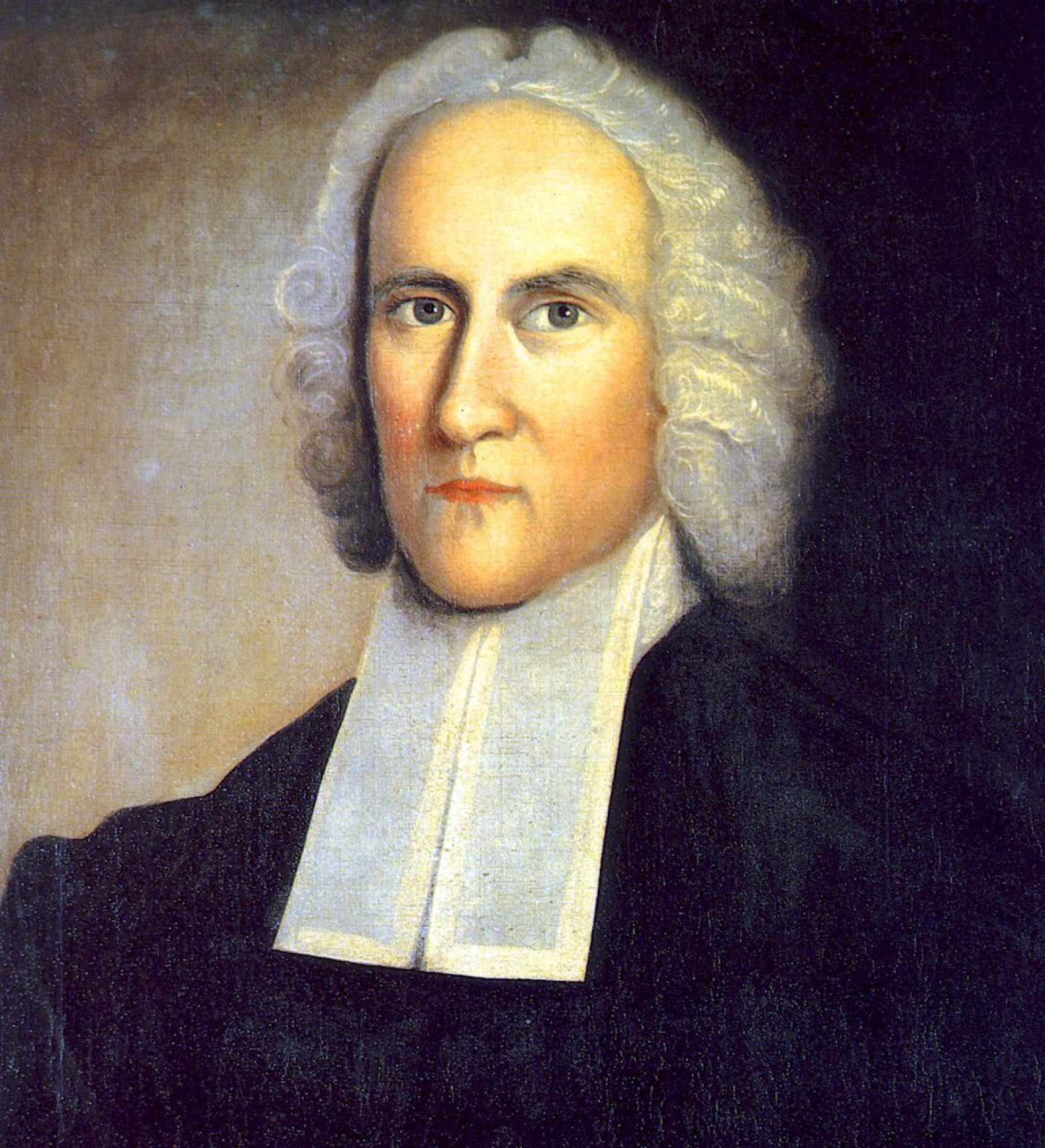
Jonathan Edwards is best known for his sermon “Sinners in the Hands of an Angry God.” In it, he harped on God’s judgement of sinners. The sermon had a big impact; Edwards couldn’t even finish when he preached it in Enfield, Connecticut, because his audience was screaming, crying out, and fainting. Because of that sermon, Edwards is often thought of as a “fire and brimstone preacher,” as Aaron Burr sings in the musical Hamiton.
However, that isn’t a realistic description of Edwards. He didn’t just focus on judgement. George M. Marsden writes in his book A Short Life of Jonathan Edwards, “Edwards could literally scare the hell out of an audience, but he also had a much gentler side” (68). In other words, though Edwards sometimes frightened people into repentance, he also cared for their souls and had a solid understanding of God’s grace. During his life, he was actually more well known for a letter he wrote to an eighteen-year-old girl named Deborah Hathaway than he was for “Sinners”; in it, he encouraged her, “in all your course . . . walk with God and follow Christ as a little, poor, helpless child, taking hold of Christ’s hand, keeping your eye on the mark of the wounds on his hands and side, whence came the blood that cleanses you from sin” (69). Edwards believed that God was the righteous judge, but he also believed that God was the humble, loving Christ who came to save and help sinners if they repented.
Although Edwards believed that God was gracious to Christians when they repented of their sin, and that humans can’t stop sinning without Jesus’ help, he insisted that if humans sin then they can’t have a good relationship with God. The Bible states that God is more important than anything or anyone else. So Edwards strove to stop sinning. “Driven by his theological vision that a loving, faithful relationship to God was by far the most important thing in life and that all other loves had to be subordinate to that, Edwards set a standard of faith and practice that was difficult for most people to sustain” (88). He prayed many times a day, both by himself and with his family; he followed a strict diet because he believed it helped him concentrate on his work and strengthen his health, which was delicate. When he needed a break from working in his study (which he reportedly did for 13 hours a day), he would chop wood or go horseback riding. He kept pieces of paper pinned inside his coat to write useful thoughts on. Even when he was a child, Edwards was very pious: when he was nine years old, he built a hideout in the woods, not to play in, but to pray in.
Edwards cared so much about deep spiritual and religious matters that most people found him “stiff and unsociable.” Samuel Hopkins, one of his students, insisted that “among his friends, when talking on serious subjects, [Edwards] was an animated conversationalist.” However, Marsden suggests that “both the accusation and the counter were likely true. Anyone who shared his deep theological and spiritual concerns would find Edwards fascinating to be with; those who did not would see him as too serious and intimidating” (88). Edwards thought that his time was better spent working in his study than conversing with people, unless the conversation was about some pertinent theological argument.
Even when he was preaching, Edwards wasn’t the best speaker. In the early 1740s, a very well known evangelist of the day, George Whitefield, came to the American Colonies from England. He held crowds spellbound for hours with his eloquence, and Benjamin Franklin estimated that 45,000 people would be able to hear him when he preached outdoors. Whitefield also usually preached extemporaneously, which allowed him to put even more feeling into his words. Edwards, on the other hand, preached from a full manuscript that he basically memorized, and he had a weak voice. He seldom gestured and almost never made eye contact–“It was said that he seemed to be staring through the bell rope in the back of the church.” But people still sat in rapt attention when he preached, because he had very clear logic and “spiritual intensity that could sometimes cast a spell over his listeners” (66). At times, Edwards also used imagery to bring his words to life, as he did in “Sinners.”
Edwards understood that it takes time to know if a person is a true Christian or not. In a speech to college students who were denouncing their Christian professors as unbelievers (one young man was expelled after announcing that his teacher had no more grace than a chair), Edwards warned against “the habit of publicly declaring who is or who is not truly converted.” Marsden writes that “since the first Northampton awakening Edwards had learned much about how easy it was to be wrong in judging external signs, so he urged caution in evaluating others, especially those one did not know well” (71). Edwards sometimes spoke of fire and brimstone to make his point, but he was not characterized by attempting to scare people into salvation. He cared about the state of their souls, and knew that talk of hell and judgement alone doesn’t lead to lasting repentance.
Works Cited
Marsden, George M. A Short Life of Jonathan Edwards. Wm. B. Eerdmans Publishing Co., 2008.
Featured image from Wikipedia. Public domain, https://commons.wikimedia.org/w/index.php?curid=68036
 Ellen Sheehy