A 13 minute read.
Communication is a vital part of human culture, and it often goes wrong. Many times, miscommunication can be funny. One of my favorite jokes as a child was about two dumb Norwegian men named Sven and Ole who went hunting for moose in the Alaskan wilderness. Their guide said, “if you get lost, fire a shot into the air and I’ll come find you!” Sven and Ole were not the two brightest bulbs in the light fixture, so they did get lost, so Sven fired off a shot. They waited, and waited, and after an hour no one came. So he fired another, and another hour went by. So he fired again. Finally, Ole said, “Sven, I think you’d better fire another shot, I’m not sure the guide is coming.” And Sven said, “I can’t, that was my last arrow!” Misunderstandings like this often happen on a much larger scale with much larger consequences. The Columbia space shuttle’s accident and ensuing investigation show that big ideas cannot be simplified, and as a result the method of communicating them is vital.
In January 2003, the Columbia space shuttle flew its 28th and final mission for the National Aeronautics and Space Administration (NASA) (Columbia Accident Investigation Board [CAIB], 2003, p. 27). Less than two minutes after the shuttle launched, a large piece of foam broke off the hydrogen and oxygen tank attached to the shuttle and struck the leading edge of its left wing (CAIB, 2003, p. 11). The foam accident was not discovered until NASA’s ground crews reviewed footage of the launch the next day. Because no one could zip up to space and inspect the wing in person, Boeing engineers ran a series of tests using a mathematical model called Crater to determine if the damage was detrimental. NASA concluded that if the foam had impacted the protective coating on the wing, heat damage would occur upon reentry to the atmosphere but it would most likely not damage the wing’s internal structure. They decided to proceed with the mission as if nothing had happened (CAIB, 2003, p. 38).
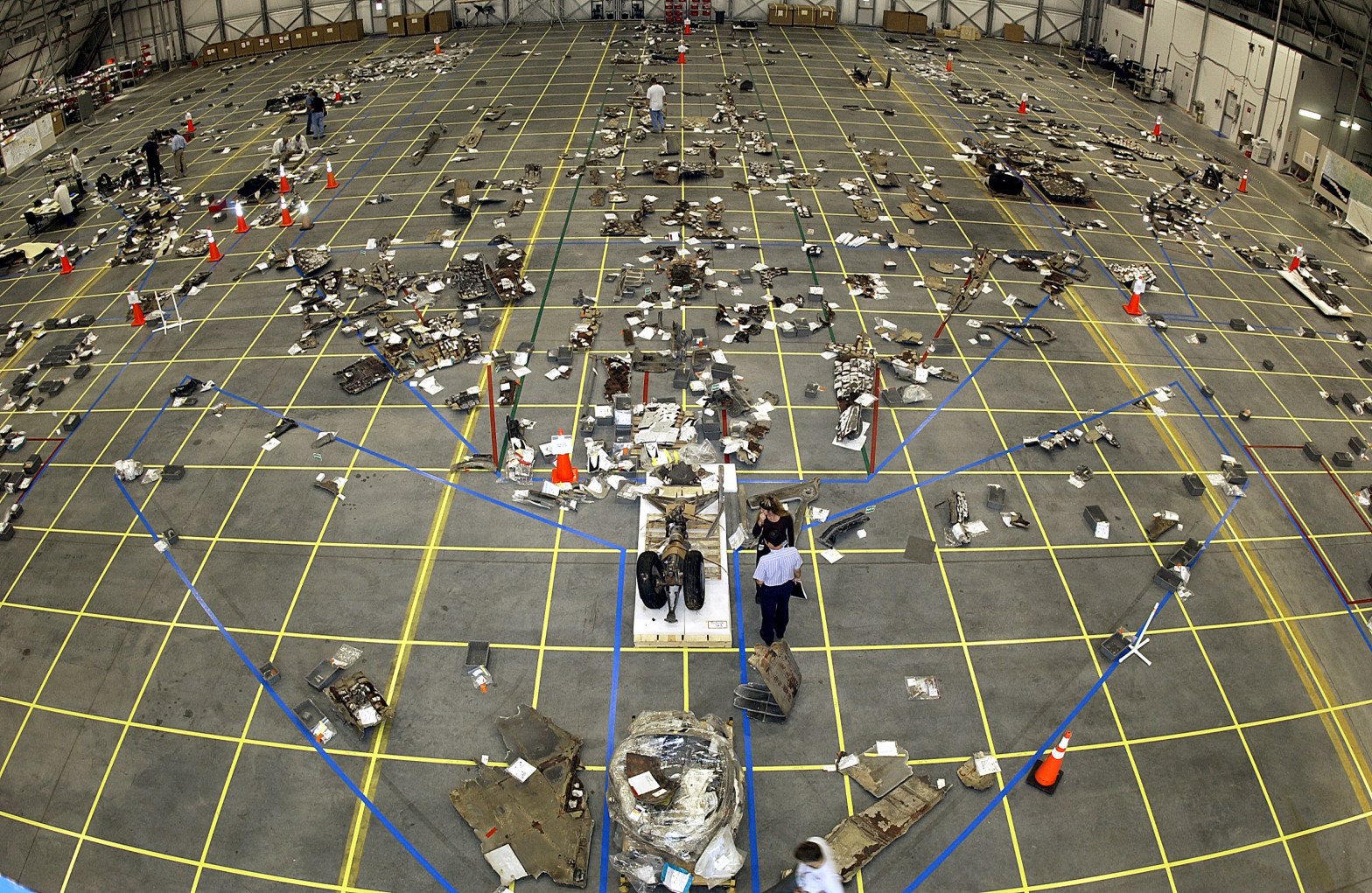
The Columbia successfully orbited for sixteen days while its seven crew members conducted research and began reentry on February 1st. While the wing’s damage had not affected space flight, “abnormal indication” was noticed less than five minutes after the shuttle began descending (CAIB, 2003, pp. 11-12). Researchers later found that because of the shuttle’s launch speed, the foam had hit the wing with an impact between 416 and 573 miles per hour (CAIB, 2003, p. 34) and created a breach in the protective covering. This allowed heat–probably over 5,000 degrees Fahrenheit–to enter the wing as the shuttle sliced through the atmosphere, and the aluminum frame melted (CAIB, 2003, p. 12). One minute the mission commander was speaking over the radio, and the next the Columbia was gone. Pieces of the shuttle were strewn over 2,000 square miles of the southern U.S., landing in fields and lakes and people’s car windshields (CAIB, 2003, p. 39, 44). After more than two weeks in space, the Columbia and everyone on it died 16 minutes before the scheduled touchdown on Earth (CAIB, 2003, p. 6).
Engineers at NASA mainly used PowerPoint slides to convey information.
If NASA had realized the danger of the situation, they might have done something to prevent it. But it is difficult to figure out what caused the organization to dismiss the foam strike. Was it a problem with the Crater model? Was it a manager’s oversight? The CAIB decided that “NASAʼs organizational culture had as much to do with this accident as foam did” (2003, p. 12). Therefore it is important to consider how the intraorganizational communication at NASA failed in this situation.
NASA’s Return to Flight Task Group (RTFTG) in their 2005 final report on the incident said that at the time of the Columbia’s flight, engineers at NASA mainly used PowerPoint slides to convey information. Many engineering packages in the organization were documented and communicated using PowerPoint alone. The Task Group stated,
In some instances, requirements are defined in presentations, approved with a cover letter, and never transferred to formal documentation. Similarly, in many instances when data was requested by the Task Group, a PowerPoint presentation would be delivered without supporting engineering documentation. (p. 190)
In other words, PowerPoint was being used in the place of technical documents (such as reports, papers, and alaysies). The CAIB (2003) agreed with the Task Group, calling NASA’s use of PowerPoint “endemic” and labeling the overuse of slideware an “illustration of the problematic methods of technical communication at NASA” (p. 191). Engineers and others at NASA were sending the slide presentations as email attachments as well as using them with oral presentations, meaning that people were reading the slides with no context (CAIB, 2003, p. 191). The slides were created to assist with the presentation, but engineers used them as a document. This created ample opportunity for confusion. The CAIB (2003) wrote, “As information gets passed up an organization’s hierarchy, from people who do analysis to mid-level managers to high-level leadership, key explanations and supporting information is filtered out” (p. 191). Without repeating the oral presentation, information was lost. Thus it makes sense that a senior manager might not realize the danger the Columbia was in.
In their report, the CAIB (2003) writes, “[The Debris Assessment Team’s] presentation included the Crater analysis, which they reported as incomplete and uncertain. However, the Mission Evaluation Room manager perceived the Boeing analysis as rigorous and quantitative” (p. 201). In other words, there was a disconnect between what was said by engineers during the briefing about the foam strike and what was heard by officials, because, “The choice of headings, arrangement of information, and size of bullets on the key chart served to highlight what management already believed” (p. 201). How information is displayed is important and affects how people think. Here’s another way to think about it: good writing is important. Everyone has, at some point in their life, read a very bad essay, one where they stare at the sentences and wonder, what is the author’s point? Boeing’s PowerPoint was similar to this because it used poor grammar and jumbled bullet points. Ideas are only as clear as the writing or speech used to communicate them.
Edward Tufte, a professor at Yale University, influenced the CAIB’s decision that PowerPoint caused communication issues within NASA. In 2006, he published a short book titled The Cognitive Style of PowerPoint: Pitching Out Corrupts Within presenting his theory. In it, he analyzes several key slides in Boeing’s PowerPoint that have many grammatical and logical errors on them. One bullet point reads, “Initial penetration to described by normal velocity” (pp. 10-11). This is not grammatically correct. He also points out issues with how the information was worded. For example, a slide titled “Review of Test Data Indicates Conservatism for Tile Penetration” should have instead been named, “Review of Test Data Indicates Irrelevance of Two Models” (p. 10). Because the titles were inaccurate, they led employees of NASA to draw inaccurate assumptions about the content.
Tufte’s criticisms of NASA’s slides are largely based on bad writing, which could occur in technical papers as well. This suggests (counter to Tufte’s point) that the issue is bigger than PowerPoint.
Tufte (2006) argues that PowerPoint itself is the reason for these misunderstandings. He writes, “[PowerPoint] demands a shorthand of acronyms, phrase fragments, clipped jargon, and vague pronoun references in order to get at least some information into the tight format . . . There isn’t enough space for specific and precise phrases” (10-11). PowerPoint slides are small, and information must be condensed to fit on them. When information is condensed, it can become unclear. Unclear information is unclear communication. Unclear communication can lead to the death of astronauts–astronauts who are someone’s child and spouse and parent. So in his book, Tufte (2006) advocates that PowerPoint (PP) shouldn’t be used at all: “Technical articles are not published in PP; why then should PP be used for serious technical analysis, such as diagnosing the threat to Columbia?” (p. 11). He seems to believe that technical papers were developed to prevent these types of miscommunications, so organizations shouldn’t branch out and use alternative methods.
Jean-Luc Dumont, an engineer who trains researchers in effective communication, doesn’t fully agree with Tufte. In 2005, he wrote a counterargument to Tufte’s book called “Slides are Not all Evil.” In it, he expresses three main contentions with Tufte’s ideas that all center around Tufte’s argument being based on assumptions rather than evidence. First, Dumont argues that verbal presentations, and the slides that go along with them, are not written documents and therefore should not be treated as written documents. His argument is that Tufte should not be criticizing the PowerPoint for being badly written when no one would expect it to have all the information. He contends that Tufte “discusses example slides out of context, with no effort whatsoever to imagine what the presenters might have said while showing them.” In other words, if Tufte didn’t extrapolate the slides from their context, he would be able to better understand the information they represented, and he would realize there were not as many issues as he thought. However, I think this actually further supports the Columbia case: the problem with the space shuttle miscommunication was that NASA was using PowerPoint in place of written documents. Slides were sent via email without context (CAIB, 2003, p. 191). The CAIB and the Task Group were often given only PowerPoint presentations when they asked for formal documentation (CAIB, 2003, p. 191; RTFTG, 2005, p. 190). It would not make sense for NASA to withhold technical reports and other documents from an investigative group when the organization’s reputation was at risk.
Dumont’s second argument is that the product and the tool are separate things. He points out that Tufte is not clear about whether he is critiquing all slideware in general, or specifically PowerPoint. Dumont (2005) notes that “many of the shortcomings pointed out by Tufte are by no means typical of PowerPoint, or even of slides, and might as easily creep up in the paper handouts he recommends for ‘serious presentations.’” This is true. As I pointed out earlier in this paper, Tufte’s criticisms of NASA’s slides are largely based on bad writing, which could occur in technical papers as well. This suggests (counter to Tufte’s point) that the issue is bigger than PowerPoint.
Dumont’s third contention is related to the second. He suggests that Tufte’s evidence is flawed, meaning Tufte found the worst example of PowerPoint usage at NASA to critique, rather than looking at what PowerPoint could be. Dumont concedes that while some of Tufte’s points are good, Tufte’s evidence is not, and many of Tufte’s complaints about over-generalizations, poor organization, and bad headings could be applied to Tufte’s own book. But I think this shows that no one is free from the challenges of communication. In the end, Dumont (2005) writes that his “main reaction to Tufte’s booklet, as evidenced for example by the discussion on his Web site, is an exhortation not to blame the tool for the way people use it.” He makes an important point here. Tufte’s conclusion is that PowerPoint itself is the issue, but Tufte’s evidence simply shows that PowerPoint can abet poor communication. I would agree with Dumont in that I believe Tufte takes too strong a stance against PowerPoint. PowerPoint taken strictly by itself is harmless, yet has as much potential for miscommunication as any written document.
But whether or not Tufte’s conclusion falls through is ultimately unimportant. His theory makes it clear that the medium with which an idea is presented affects how people understand the idea. This point is backed up by another theory that the medium is the message. In 1985, Neil Postman published a book called Amusing Ourselves to Death about how television has changed American culture, and I think some of his ideas can be applied to the case before us. He borrows ideas from Marshall McLuhan (p. 8), and Postman’s thesis is, “how we are obliged to conduct . . . conversations will have the strongest possible influence on what ideas we can conveniently express. And what ideas are convenient to express inevitably become the important content of culture” (p. 6). In other words, the way we say things affects how we say it, and how we say things affects what people think.
Postman (1985) gives the example of how television has influenced who can run for President, pointing out that it appears overweight people are now excluded from the office (p. 4). He argues that William Howard Taft could never run for president today because he weighed 300 pounds, saying, “The shape of a man’s body is largely irrelevant to the shape of his ideas when he is addressing a public . . . but it is quite relevant on television” (p. 7). It’s no surprise that several recent American presidents have had a background in television or film. If television has such a great effect on a culture, could not PowerPoint have changed how NASA conveyed ideas on a smaller scale? Postman writes, “You are mistaken in believing that the form in which an idea is conveyed is irrelevant to its truth” (p. 21).
“You are mistaken in believing that the form in which an idea is conveyed is irrelevant to its truth.”
Neil Postman
So if I were given the opportunity to speak with officials at NASA before the Columbia launched in 2003, I would entreat them to pause and examine the culture that they were building. When an organization is participating in cutting-edge and dangerous research and exploration, there is no room for miscommunication. PowerPoint presentations can be useful, but should not be the be-all and end-all of the conversation. Computer scientist Peter Norvig argues in a 2003 article titled “PowerPoint: shot with its own bullets” that PowerPoint hinders creativity. He writes, “Use visual aids to convey visual information: photographs, charts, or diagrams. But do not use them to give the impression that the matter is solved, wrapped up in a few bullet points.” The ideas NASA was communicating were so much bigger than a list, albeit a long and complicated one, could convey. Big ideas cannot be simplified, and potential damage to a space shuttle is one of the biggest of them all.
References
Columbia Accident Investigation Board. (2003). Report Volume 1. https://s3.amazonaws.com/akamai.netstorage/anon.nasa-global/CAIB/CAIB_lowres_full.pdf.
Doumont, J. (2005). The Cognitive Style of PowerPoint: Slides Are Not All Evil. Technical Communication, 52(1), 64-70. https://ezproxy.bhsu.edu/login?url=https://www.proquest.com/scholarly-journals/cognitive-style-powerpoint-slides-are-not-all/docview/220963439/se-2.
Norvig, P. (2003). PowerPoint: shot with its own bullets. The Lancet, 362(9381), 343-344. https://doi.org/10.1016/S0140-6736(03)14056-1.
Postman, N. (1985). Amusing Ourselves to Death. Penguin Books.
Return to Flight Task Group. (2005). Final Report of the Return to Flight Task Group. https://ntrs.nasa.gov/api/citations/20050201800/downloads/20050201800.pdf.
Tufte, E. (2006). The Cognitive Style of PowerPoint: Pitching Out Corrupts Within. Graphics Press LLC.
Featured image Public Domain, https://commons.wikimedia.org/w/index.php?curid=6476056
 Ellen Sheehy